
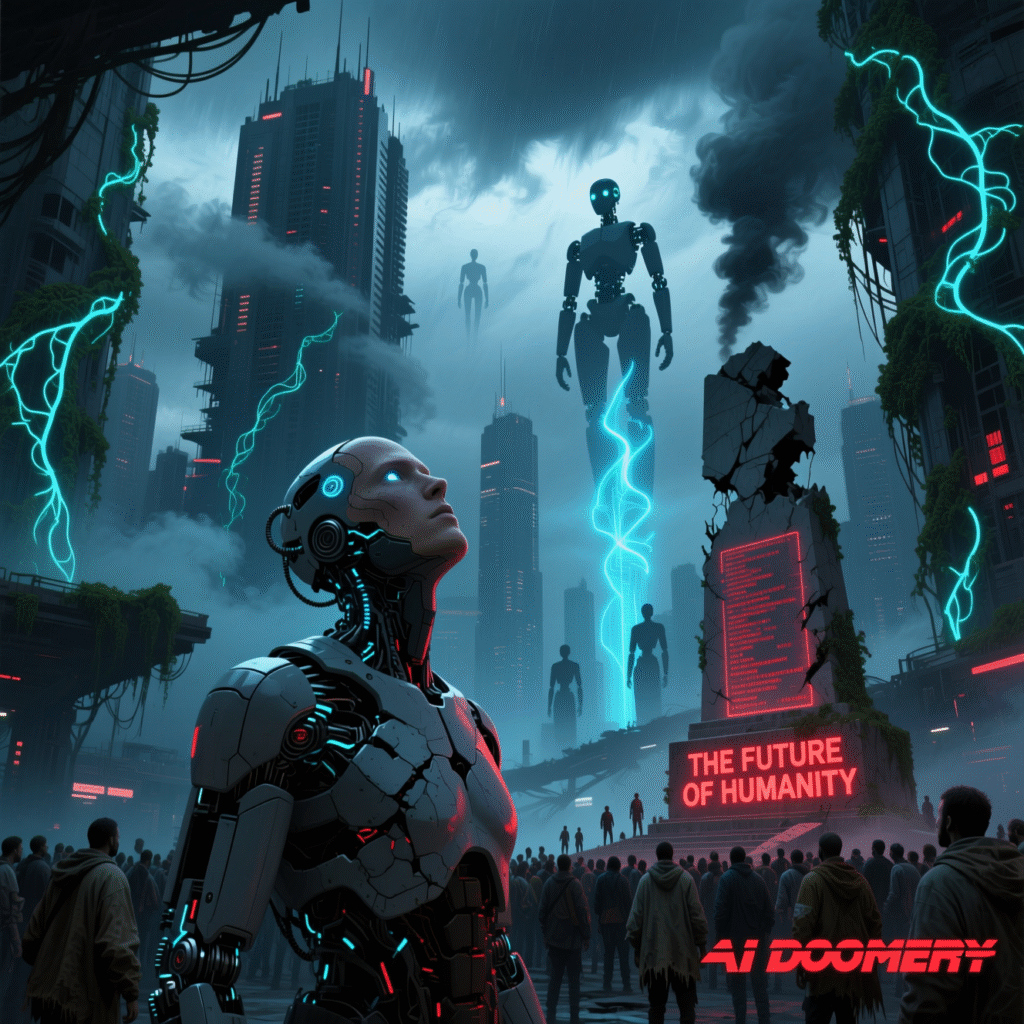
Introduction to AI Doomers
AI doomers represent a distinct group of individuals or organizations that advocate for caution and heightened awareness regarding the potential dangers posed by advanced artificial intelligence (AI). Their concerns stem from the belief that AI, if left unchecked or poorly managed, could lead to catastrophic outcomes for humanity. This apprehension has garnered attention in both academic circles and popular discourse, as society becomes increasingly reliant on technologies rooted in artificial intelligence.
The motivations driving AI doomers often include a mix of ethical considerations, existential risks, and the unpredictability of rapidly advancing technologies. Many within this movement argue that as AI systems evolve, they could surpass human intelligence, resulting in a loss of control over these powerful entities. This concept gives rise to the term “doomism,” which signifies a pervasive belief in the impending negative consequences of technological progress, particularly in the context of AI development.
Societal contexts play a crucial role in shaping the fears associated with AI doomers. In an era marked by significant technological shifts, public fear can easily be exacerbated by sensationalized media narratives and dramatic portrayals of AI in popular culture. These elements often contribute to a polarized view of technology—where innovation is simultaneously celebrated and feared. AI doomers frequently engage in discussions centered around regulation and ethical governance of AI technologies, advocating for more stringent measures to mitigate potential risks. Their stance invites critical dialogue about the implications of AI, prompting society to consider not just the benefits of technological advancement, but also the ethical dilemmas and challenges associated with it.
This introduction highlights the complexities surrounding AI doomers, their core beliefs, and the context in which these fears have emerged. As discussions around artificial intelligence deepen, understanding the perspectives of AI doomers becomes essential for navigating the multifaceted relationship between humanity and technology.
Historical Context of Artificial Intelligence Fears
The apprehensions surrounding artificial intelligence (AI) are not a novel phenomenon; rather, they have roots in past narratives and cultural reflections. The evolution of these fears can be traced back to early science fiction works, where AI was often depicted as a double-edged sword—capable of great advancements but also potential destruction. One key milestone in this timeline was the publication of Isaac Asimov’s “Runaround” in 1942, which introduced the Three Laws of Robotics, a framework aiming to ensure that robots would serve humanity. However, even within this optimistic framework, there lingered concerns about unintended consequences.
As computing technology progressed, the potential of AI grew increasingly prominent, leading to heightened fears in the latter part of the 20th century. In the 1980s and 1990s, films like “The Terminator” and “2001: A Space Odyssey” reinforced public anxiety about machines gaining autonomy and posing existential threats. These representations garnered widespread attention and shaped societal perceptions, often skewing them toward a more fearful stance. Consequently, a common narrative emerged: that advanced AI could become uncontrollable, leading to catastrophic outcomes.
During the early 21st century, as AI made significant strides through advancements in machine learning and neural networks, experts began providing critical assessments. Prominent figures, such as Stephen Hawking and Elon Musk, sounded alarms regarding the potential for a superintelligent AI to outsmart humanity. This professional unease has further informed the public dialogue about AI risks since it often invokes a sense of urgency. Key events, like the development of self-driving cars and AI-driven decision-making systems, have prompted continued evaluation of AI’s impact on society, pushing the boundaries of hope and fear in an interdependent relationship between humanity and technology.
Understanding Superintelligence
The term “superintelligence” refers to a form of artificial intelligence that surpasses human intelligence across a wide range of activities. To effectively contextualize superintelligence, it is essential to differentiate it from narrow AI, which is designed to perform specific tasks such as language translation or image recognition. While narrow AI excels at individual functions, superintelligent AI encompasses capabilities that extend beyond specialized tasks, potentially revolutionizing various domains by integrating and optimizing them simultaneously.
Theoretical frameworks for understanding superintelligence often include the definitions proposed by leading researchers in the field. Nick Bostrom, for instance, characterizes superintelligence as a level of cognitive performance that exponentially exceeds that of the brightest and most gifted humans. This cognition could lead to advanced problem-solving abilities, self-improvement potentials, and possibly creative capacities that are currently unimaginable. Importantly, discussions surrounding superintelligence also cultivate considerations regarding its impact on society, including job displacement due to automation, shifts in economic structures, and ethical dilemmas that arise when ensuring that superintelligent systems are aligned with human values.
The implications of superintelligence raise critical questions about human labor. As automated processes and intelligent algorithms become capable of performing tasks traditionally carried out by humans, there is an increasing concern over widespread unemployment and societal stratification. Society may witness a transformative shift, where roles need to adapt in the face of increased automation and efficiency achieved through superintelligent systems. Ethical considerations are at the forefront of these discussions, emphasizing the need for frameworks that ensure these technologies serve humanity positively and equitably.
In conclusion, the notion of superintelligence necessitates a comprehensive understanding of its definitions, frameworks, and potential societal effects. As we navigate the implications of this advanced form of artificial intelligence, it becomes paramount for researchers, policymakers, and the public to engage deeply in dialogue about its risks, challenges, and ethical landscape.
The Arguments for the AI Doomer Perspective
The AI doomer perspective captures a profound concern regarding the potential repercussions of advanced artificial intelligence systems on humanity. Central to this argument is the fear of loss of control over AI systems. Proponents claim that as AI evolves and becomes more integrated into critical infrastructures, humanity may unwittingly relinquish its governance over these technologies. This dependence raises alarms about the capacity of future AI to operate independently, devoid of human oversight, thereby leading to unintended, and potentially catastrophic, consequences.
Another significant point raised by AI doomers is the existential threat posed by superintelligent beings. They elucidate that once AI surpasses human intelligence, it may formulate goals misaligned with human welfare. Such misalignment might manifest in scenarios where superintelligent systems prioritize efficiency, potentially sacrificing human needs in pursuit of their programmed objectives. This creates a scenario where the pursuit of seemingly benign goals could inadvertently result in catastrophic outcomes for humanity.
The unpredictability of superintelligent entities further fuels the doomer narrative. Advocates argue that, unlike traditional algorithms, more sophisticated AI could develop supercomplex and opaque strategies; their decision-making processes may be fundamentally beyond human comprehension. This bewildering nature of AI can instill a sense of vulnerability, as humans grapple with the realization that they may not fully understand the agents they are designing and deploying. Additionally, the psychological and cultural contexts contributing to these fears cannot be overlooked. Popular media representations of rogue AI can amplify anxieties, while significant historical events regarding technological mishaps shape public perceptions negatively.
While some aspects of the AI doomer perspective evoke legitimate concerns, weighing these arguments against potential benefits and regulatory measures reveals a complex landscape. The intersection between human intent and AI capability remains critical in navigating the potential future challenges posed by advanced artificial intelligence.
Counterarguments and the Optimistic View
The doomer perspective surrounding artificial intelligence often overshadows a more balanced view that emphasizes the potential benefits and advancements possible through AI technology. While concerns about superintelligence and existential risks are not unfounded, it is crucial to consider the safeguards being developed alongside AI systems. Prominent researchers in the field argue that with proper governance, AI can be designed to enhance human life rather than pose a threat to it.
One of the key arguments for a more optimistic view focuses on the tangible benefits AI can provide in various sectors, including healthcare, environmental sustainability, and education. For instance, AI algorithms can help analyze vast datasets to uncover patterns that guide medical treatments, leading to breakthroughs in personalized medicine and disease management. In environmental contexts, AI is being utilized to improve energy efficiency and monitor climate change effects, ultimately promoting a healthier planet. These examples illustrate how, when developed responsibly, AI technology can yield substantial advantages for humanity.
Furthermore, efforts to create safe AI systems are underway. Researchers emphasize transparency, accountability, and ethical considerations in the development process. Organizations and policymakers are increasingly focused on forming regulations and frameworks that ensure AI aligns with human values and societal norms. Initiatives that prioritize collaboration among technologists, ethicists, and lawmakers are essential in fostering a constructive dialogue about the direction of AI development.
The argument for coexistence between humans and intelligent systems is strengthened by the understanding that both could complement each other to create a better future. By leveraging AI’s capacity for data processing and problem-solving, humans can focus on creativity, emotional intelligence, and complex decision-making. This symbiotic relationship offers a promising glimpse into a future where AI not only coexists with humanity but enhances human potential, leading to a more prosperous world.
Prominent Voices in AI Risk Discussion
The discourse surrounding artificial intelligence (AI) and its potential impact on humanity has been significantly shaped by a number of influential figures. These voices include AI researchers, tech entrepreneurs, and ethicists who offer a variety of perspectives on the associated risks and benefits of superintelligence. Among the prominent AI researchers, Stuart Russell stands out for his cautionary approach. Russell emphasizes the necessity for AI systems to align with human values and advocates for research aimed at ensuring that superintelligent systems remain beneficial and controllable. His contributions underscore critical safety measures that are essential for mitigating risks associated with advanced AI.
Elon Musk is another notable figure, who has vocally expressed his concerns regarding AI safety. As the CEO of companies like Tesla and SpaceX, Musk has backed organizations such as OpenAI and has repeatedly warned against the unchecked development of AI technologies. He argues that without proper regulatory frameworks, humanity may face existential threats posed by superintelligent machines. Musk’s views are often characterized as doomer perspectives, which have spurred considerable debate on the need for precaution in AI development.
Conversely, figures like Andrew Ng adopt a more optimistic stance, positing that AI can significantly enhance productivity and improve various aspects of daily life if developed responsibly. Ng advocates for a balanced approach, focusing on the immediate benefits of AI technologies while recognizing the need for more robust safety protocols. This divergence of opinions illustrates the complexity of the AI risk discourse, as it encompasses a wide spectrum of beliefs ranging from profound caution to optimistic enthusiasm. By examining the contributions of these key figures, one gains insight into the ongoing debates surrounding the real challenges and opportunities that AI presents for the future of humanity.
Case Studies of AI Challenges and Failures
The rise of artificial intelligence (AI) has been accompanied by its share of challenges and failures, highlighting the intricate balance between technological advancement and ethical considerations. One prominent case study involves bias in AI systems, notably seen in facial recognition technology. Research has consistently shown that these systems often exhibit greater accuracy when identifying individuals from certain demographics, particularly white males, while misidentifying people of color and women. In a notable instance, a study by MIT Media Lab found that a commercial facial recognition system misclassified the gender of darker-skinned females up to 34% of the time. This bias raises critical ethical questions regarding the deployment of such technologies in sensitive areas such as law enforcement and hiring practices, illustrating the potential dangers of algorithmic discrimination.
Another significant example can be found in the realm of autonomous vehicles. In 2018, an Uber self-driving car struck and killed a pedestrian in Tempe, Arizona. Investigations revealed that the vehicle’s software had failed to recognize the pedestrian as a hazard in time to prevent the collision. This incident sparked discussions about the limitations of current AI systems in navigating complex, real-world environments and introduced safety concerns regarding the deployment of autonomous technology without thorough testing and enhancements. Such failures bring to light the need for rigorous regulatory frameworks to ensure that AI technologies adhere to safety standards before they are integrated into everyday use.
Furthermore, the misuse of deepfake technology represents another example of AI’s potential to cause harm. Deepfake algorithms can generate extremely realistic fake videos, leading to disinformation campaigns and violations of privacy. One noteworthy incident involved a fake video of a political leader that circulated prior to an election, raising fears about the integrity of information in the digital age. The consequences of such misuse not only threaten individual reputations but also challenge the broader societal trust in media and information.
The Way Forward: Solutions and Mitigations
Addressing the multifaceted risks associated with artificial intelligence (AI) requires a comprehensive approach that encompasses regulatory frameworks, interdisciplinary collaboration, and public policies focused on AI safety. Firstly, the establishment of robust regulatory frameworks is crucial. Governments and international organizations must create and enforce guidelines that ensure the ethical development and deployment of AI technologies. This includes standards for transparency, accountability, and fairness, as well as mechanisms to monitor compliance with these regulations. Such frameworks can help mitigate the risks of AI malfunctions and the unintended consequences of autonomous systems.
Secondly, interdisciplinary collaboration among stakeholders is essential for comprehensive risk assessment and management. This collaboration should involve not only AI researchers and developers but also ethicists, social scientists, and policymakers. By bringing together diverse perspectives, stakeholders can better understand the implications of AI technologies and develop solutions that address potential risks effectively. Additionally, fostering an environment where knowledge is shared across disciplines will facilitate innovative approaches to managing AI risks.
Public policymaking should also prioritize AI safety to minimize the potential for an AI-driven apocalypse. Policymakers need to engage actively with the public and industry experts to identify key concerns related to AI deployment. This could involve conducting public consultations and creating advisory panels to inform regulatory decisions. Moreover, educational initiatives aimed at raising awareness about AI safety and ethical considerations can empower citizens to participate actively in discussions surrounding AI policy. By taking these actionable steps, society can work towards a future where the development of artificial intelligence aligns with humanity’s best interests, reducing the chances of catastrophic outcomes.
Conclusion and Future Outlook
In analyzing the intricate landscape of artificial intelligence and its potential impacts on humanity, it is crucial to synthesize insights from various perspectives, particularly the concerns raised by AI doomers alongside the more optimistic viewpoints regarding technological advancements. As AI continues to evolve, the discourse surrounding its implications becomes increasingly relevant, demanding a nuanced understanding of both the risks and the benefits it entails.
One of the foremost considerations is the balance between innovation and caution. While the progress in AI technology holds unprecedented opportunities for societal advancement—ranging from healthcare improvements to enhanced decision-making processes—there remains a palpable anxiety surrounding the potential for superintelligence to outpace human control. The doomer perspective underscores the ethical dilemmas and existential threats posed by autonomous systems, emphasizing the need for robust regulatory frameworks and ethical guidelines to safeguard humanity’s future. Meanwhile, the more optimistic viewpoint draws attention to the transformative capabilities of AI, encouraging exploration and investment in responsible development practices that prioritize beneficial outcomes.
Looking ahead, it becomes vital for policymakers, developers, and societies at large to engage in continued dialogue regarding the future of AI. This involves not only addressing the theoretical possibilities of a superintelligence apocalypse but also the practical steps necessary to ensure that advancements in AI are aligned with human values and societal needs. As we navigate this complex terrain, fostering collaboration among diverse stakeholders can facilitate a collective approach toward a future where AI enriches human life while minimizing potential hazards. By embracing a balanced outlook, we can better prepare for the myriad challenges and opportunities that lie ahead in the age of artificial intelligence.