
Understanding Augmented Reality (AR)
Augmented Reality (AR) is a transformative technology that blends digital elements with the real world, enhancing the user’s perception of their environment. Unlike Virtual Reality (VR), which immerses users in a completely virtual setting, AR augments reality by overlaying computer-generated content onto real-world objects. This interaction creates a seamless integration of virtual information, driven by the fundamental principle of enriching real-world experiences through digital enhancements.
The history of AR can be traced back to the 1960s, when computer scientist Ivan Sutherland developed the first head-mounted display system. It was not until the late 20th century that the term “Augmented Reality” was coined by Tom Caudell in 1990, referencing the technology used in manufacturing to visualize components in assembly lines. Significant advancements occurred in the 2000s, notably with the launch of mobile AR applications, which popularized the use of smartphones for AR experiences.
AR technology has since found applications across diverse fields, demonstrating its versatility. In gaming, titles like Pokémon GO have showcased how AR can create engaging experiences that encourage exploration and interaction with the physical environment. In education, AR enhances learning by providing interactive simulations, enriching textbooks with 3D models, and facilitating engaging classroom activities. Similarly, in healthcare, AR has been employed for surgical training, allowing medical professionals to visualize complex anatomical structures through digital overlays, thus improving precision and outcomes.
The impact of AR on user experience is profound, allowing for the visualization of data and interactive elements in a manner that was previously unattainable. By blending the physical and digital worlds, AR creates experiences that can inform, entertain, and educate users, ultimately transforming how individuals interact with their surroundings.
Exploring Virtual Reality (VR)
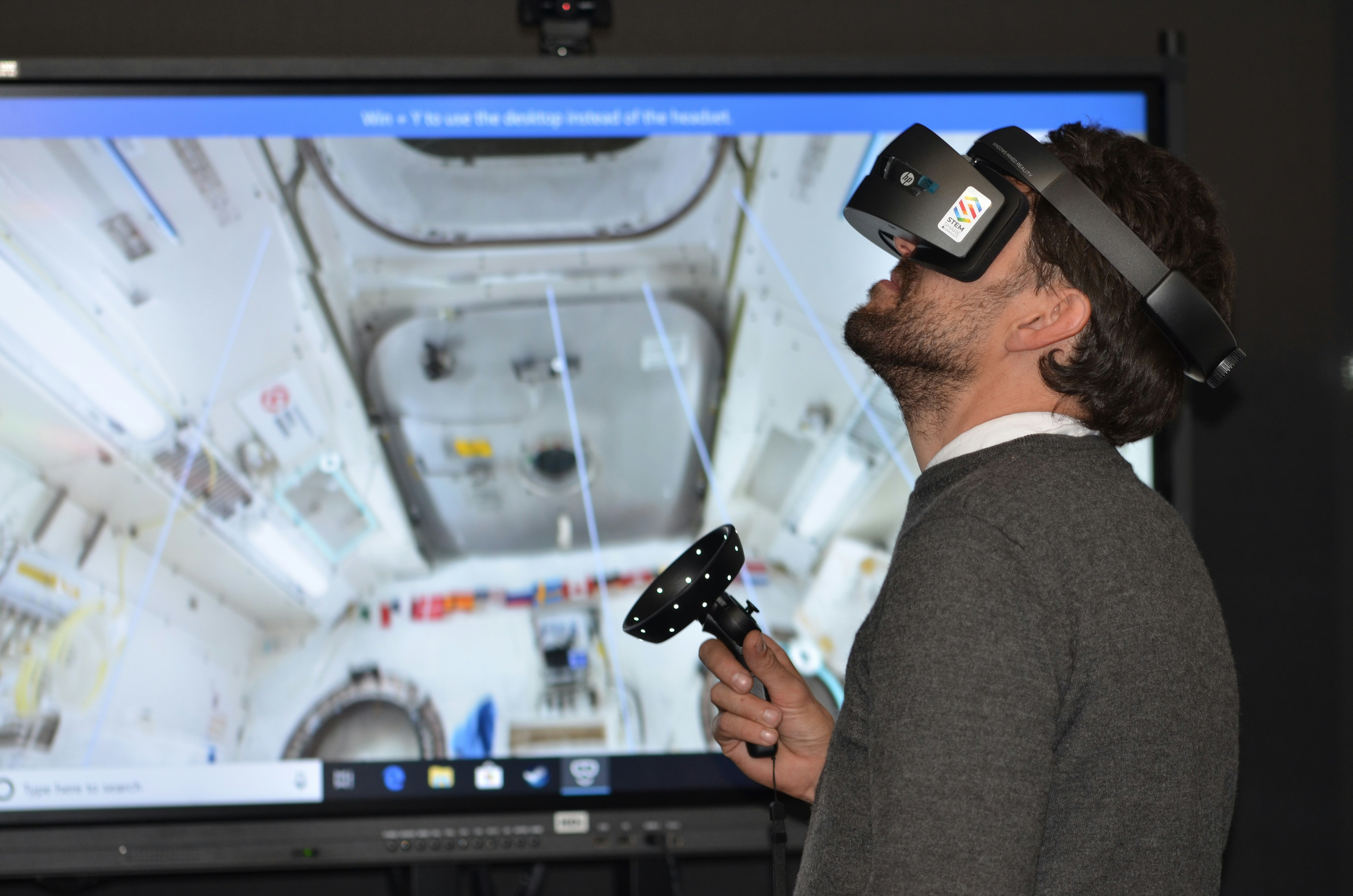
Virtual Reality (VR) represents a groundbreaking advancement in immersive technology, enabling users to engage with digitally created environments that can simulate real-world experiences. At its core, VR utilizes a combination of hardware and software to transport users into a three-dimensional world. Essential components include VR headsets, motion tracking sensors, and dynamic audio systems. The evolution of VR technology has progressed from early experimental prototypes in the 1960s, which offered rudimentary experiences, to today’s sophisticated systems capable of delivering highly immersive simulations.
Modern VR headsets, such as the Oculus Rift, HTC Vive, and PlayStation VR, illustrate significant advancements. These devices incorporate high-resolution displays, advanced motion tracking, and spatial audio, facilitating a more realistic user experience. Additionally, software applications have evolved alongside hardware, offering diverse experiences varying from gaming to virtual tourism. As a result, users can interact with 3D environments, manipulate objects, and experience narratives in ways previously thought impossible.
The applications of VR technology extend across multiple sectors, including entertainment, education, healthcare, and military training. In the entertainment industry, VR games and experiences have been designed to engage players on an emotional level, fostering deeper connections to characters and narratives. In education, VR is used as an immersive learning tool that provides students with engaging simulations, such as virtual science labs and historical recreations, enhancing retention and comprehension of complex subjects. In the field of healthcare, VR has proven effective as a therapeutic tool, helping patients confront fears, manage pain, and undergo rehabilitation in a controlled, virtual setting.
In summary, Virtual Reality has undergone remarkable evolution and continues to transform user engagement with immersive experiences across various industries. The synergy of advanced hardware and innovative applications allows VR to redefine how individuals perceive and interact with the world around them, paving the way for even more immersive experiences in the future.
The Rise of Mixed Reality (MR)
Mixed Reality (MR) has emerged as a pivotal development in the landscape of immersive technology, creating a hybrid environment where physical and digital elements coexist and interact in real-time. This evolution marks a significant advancement from traditional Augmented Reality (AR) and Virtual Reality (VR), as MR not only overlays digital information onto the physical world but also allows for sophisticated interactions between these two domains. By integrating elements from both AR and VR, MR provides users with enhanced experiences that are not only engaging but also practical across various sectors.
Technological advancements have been crucial in facilitating the rise of MR. Innovations in hardware, such as head-mounted displays and spatial sensors, have matured to the point where they can accurately track hand movements and environmental features. Devices like Microsoft HoloLens and Magic Leap are prime examples of how MR technology can create immersive experiences that adapt to the user’s real-world environment. These devices utilize cutting-edge spatial mapping and object recognition to blend the real world with holographic elements seamlessly.
The practical applications of mixed reality are wide-ranging and significant. In remote collaboration, MR enables teams to interact in shared digital spaces, regardless of geographic location, enhancing communication and fostering innovation. In simulation and training scenarios, MR allows for realistic rehearsals and learning experiences, mitigating risks associated with traditional training methods. Furthermore, in visualization, MR empowers professionals in fields such as architecture and engineering to interact with 3D models within a physical context, facilitating better design and decision-making processes.
Notably, the ability of MR to bridge the gap between digital and physical realities offers users unique experiences that were previously unrealized. This characteristic not only transforms how users engage with technology but also provides a glimpse into the future of human-computer interaction, where the boundaries between the tangible and virtual blur, leading to a more interconnected world.
The Future of Extended Reality (XR)
Extended Reality (XR) serves as a collective term that encompasses Augmented Reality (AR), Virtual Reality (VR), and Mixed Reality (MR), fundamentally changing the dynamics of how users interact with digital content. The future of XR is poised to significantly impact various sectors, including education, healthcare, entertainment, and architecture, among others. As technologies advance, the integration of XR into these fields holds the potential to enhance experiences, streamline processes, and foster collaborative environments.
Current trends indicate a surge in the application of XR, with a focus on simplifying user interfaces and improving accessibility. For instance, in education, XR can provide immersive learning experiences that go beyond traditional methods, allowing students to engage with content in a more tangible manner. Similarly, in healthcare, XR technologies are paving the way for innovative training solutions and patient treatment options, allowing practitioners to visualize complex medical scenarios or conduct remote consultations.
Despite its advantages, the widespread adoption of XR technologies raises significant ethical considerations. Privacy concerns, data security, and the potential for addiction are issues that need to be addressed as society becomes increasingly immersed in these environments. Ethical frameworks must evolve to ensure that XR technologies are used responsibly and that users’ rights are protected.
Moreover, the transformative potential of XR can fundamentally alter our perception of reality. As users blend their physical and digital lives, the lines distinguishing between the two may blur, leading to new societal dynamics. However, challenges such as technological barriers, the need for robust infrastructure, and public acceptance remain critical factors that need to be overcome. Addressing these challenges will be crucial for the successful integration and acceptance of XR technologies in everyday life.